What Works, What Breaks, and When to Make the Switch
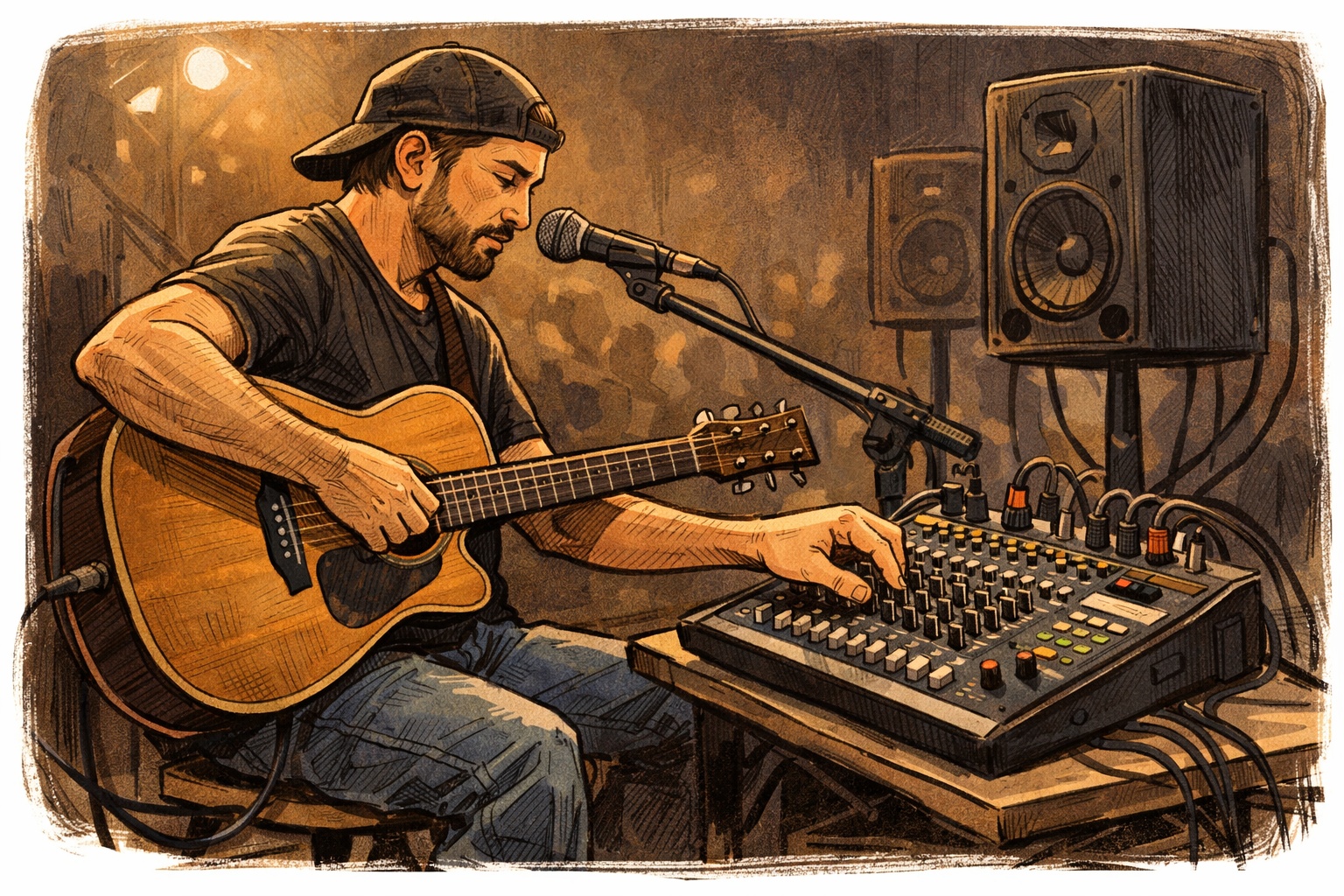
One of the biggest decisions performers face when they start gigging is who’s running the sound.
At first, the answer is usually simple: you are.
And honestly—there’s nothing wrong with that.
When Running Sound Yourself Makes Sense
If you’re just getting started playing out in public—friends’ events, small weddings, coffee shops, breweries, church socials—running your own sound is often the most realistic option.
This works especially well if you’re:
- A solo singer-guitarist
- Keyboard and vocal
- Acoustic duo
- Small, low-volume setup
In these cases, the setup is usually simple:
- A small mixer
- One or two speakers
- A couple of mics
- Maybe a DI for guitar or keys
You can dial in a basic mix, set levels conservatively, and focus on the performance. Most audiences won’t notice small imperfections—and that’s okay.
Running your own sound at this stage actually teaches you a lot:
- How loud is too loud
- What feedback sounds like before it happens
- How EQ affects vocals
- Why mic placement matters
Those lessons are valuable.
Where It Starts to Get Difficult
The challenge shows up when your setup grows.
Once you start adding:
- Bass guitar
- Electric guitars
- Drums
- Multiple vocalists
- Full bands with keys, backing tracks, or percussion
…running sound yourself becomes significantly harder.
At that point, you’re trying to do two jobs at once:
- Perform
- Mix the show
The biggest issue isn’t technical—it’s perspective.
You Can’t Hear the Room From the Stage
When you’re on stage:
- You don’t hear what the audience hears
- You’re standing behind the speakers
- The mix changes dramatically from venue to venue
Important questions you can’t easily answer while performing:
- Are the vocals clear out front?
- Is the guitar overpowering the singer?
- Is the bass muddy?
- Do backing vocals disappear in the mix?
- Does the room sound harsh or thin?
Even if it sounded great during rehearsal, every venue is different:
- Room size and shape
- Ceiling height
- Wall materials
- Indoor vs outdoor
- How full the room is
What worked last weekend may sound completely different tonight.
“But We Did a Sound Check…”
Sound check helps—but only if it’s done correctly.
When you’re running sound yourself, sound check often means:
- Setting levels on stage
- Playing one song
- Asking, “Does that sound okay?”
The problem is—you’re still not hearing the audience mix.
Sound Check Is More Than Levels — It’s Tuning the System
One of the most overlooked parts of sound check is tuning the speakers to the room.
Many people assume:
- Good speakers = good sound
- Expensive gear automatically sounds better
That’s not always true.
Professional-grade speakers can sound bad in the wrong room, while basic speakers can sound great when placed correctly and tuned well.
Every venue has its own acoustic challenges:
- Hard walls that reflect highs
- Low ceilings that exaggerate mids
- Corners that boost bass
- Long rooms that cause uneven coverage
If you don’t account for the room, no amount of good gear will fix it.
Speaker Placement Matters More Than You Think
Before touching EQ, placement comes first:
- Speakers too low blast the front row
- Speakers too high lose clarity
- Speakers behind mics increase feedback
- Corners and walls can cause muddy low end
Simply raising speakers, angling them properly, or moving them a few feet can dramatically improve sound before any EQ is applied.
Tuning Speakers With EQ and RTAs
Once placement is solid, sound check should include tuning the system, not just setting channel levels.
This is where EQ and Real-Time Analyzers (RTAs) help.
An RTA shows you:
- Frequency build-ups in the room
- Problem frequencies that cause feedback
- Harsh or muddy areas that hurt clarity
Using this information, you can:
- Reduce boomy low frequencies
- Tame harsh highs
- Pull back problem mids
- Improve vocal clarity
- Keep volume under control
This isn’t about making it sound “cool”—it’s about making it clear, stable, and consistent.
Feedback Control Starts at Sound Check
Tuning the system early helps prevent feedback before the show begins.
Instead of chasing feedback mid-song:
- Identify problem frequencies early
- Gently notch them out
- Keep overall levels lower
- Let vocals sit clearly without pushing volume
This is especially important when you’re running sound yourself, because once the show starts, your attention is split.
Why This Is Hard to Do While Performing
Proper tuning requires:
- Time
- Listening from the audience area
- Adjusting EQ while sound is playing
That’s difficult when you’re also:
- Singing
- Playing
- Watching cues
- Engaging the crowd
This is one of the biggest reasons bands eventually bring in a sound engineer.
When It’s Time to Have Someone Else Run Sound
If you’re playing:
- Full-band shows
- Important events (weddings, ticketed shows, festivals)
- New venues often
- Shows where consistency matters
…it may be time to have someone else run sound.
A dedicated sound person:
- Mixes from the audience perspective
- Adjusts for the room in real time
- Prevents issues before they’re obvious
- Lets performers focus on performing
The result is a more professional, consistent experience—every time.
Simple DIY Speaker Tuning Checklist
If you’re running sound yourself, use this quick checklist during sound check:
Before Powering On
- Place speakers in front of microphones
- Raise speakers so horns are above head level
- Angle speakers toward the audience, not walls
Basic Setup
- Start EQ flat on speakers and mains
- Set input gains properly (no clipping)
- Use high-pass filters on vocals and instruments that don’t need low end
Room Tuning
- Play music or pink noise through the system
- Listen from the audience area
- Use an RTA if available to spot problem frequencies
- Gently cut problem areas (don’t boost aggressively)
Feedback Control
- Slowly raise vocal levels during sound check
- Identify ringing frequencies
- Notch them slightly with EQ
- Stop before feedback becomes obvious
Final Check
- Walk the room if possible
- Check vocal clarity over instruments
- Record a short clip on your phone from the audience area
- Make small adjustments only
Once the Show Starts
- Avoid major EQ changes mid-set
- Adjust volume slowly
- Focus on performing
The Bottom Line
Running sound yourself is a great way to start—and for small acts, it may always be enough.
But as your setup and expectations grow, sound quality becomes harder to manage from the stage.
At some point, the choice isn’t about gear or cost—it’s about consistency, clarity, and professionalism.
If you’ve ever wondered:
- “Does this sound balanced?”
- “Why did it sound great last week but not tonight?”
- “I wish I knew how it sounded out front…”
That’s your sign.
Your audience may not know why it sounds better—but they’ll hear the difference.
Leave a Reply